
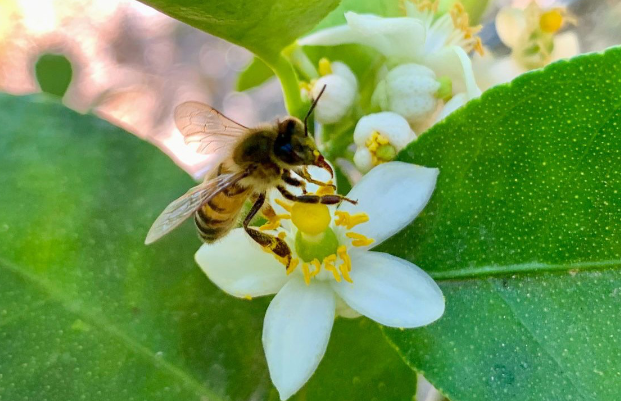
Behind a key lime, there is much more than cultivation and harvest. Natural processes also play a role in shaping fruit quality, development, and yield. A scientific study conducted at Villa Chica, a ranch operated by SiCar Farms, our sister company in Tecomán, Colima, examined one of these key factors: the role of the honeybee (Apis mellifera) in key lime production.
The study analyzed the effect of the honeybee (Apis mellifera) on different key lime trees, observing variables such as juice content, yield, fruit set, and weight. The best results were observed in trees located closer to the hives, confirming the value of pollination in agricultural productivity. For a general audience, the takeaway is simple: bees help improve the characteristics of the fruit.
As part of this research, Citrojugo played an important role by supporting the physicochemical analysis of the fruit. This stage made it possible to evaluate internal attributes with greater precision, helping translate field observations into measurable and meaningful data. Through this type of analysis, it becomes easier to understand how pollinators influence the final quality of the product.
Citrojugo’s contribution highlights the importance of bringing technical capabilities into scientific projects with agricultural impact. When industry takes part in knowledge generation, it strengthens the connection between research, production, and continuous improvement. In this case, the collaboration helped deepen the understanding of a highly relevant topic for citrus production and for the role pollinators play in everyday foods like key lime.
Efforts like this also help bring science closer to a broader audience. Topics such as bees, pollination, and fruit quality become more accessible when their effects can be explained in a clear and relatable way. That is part of the value of this research: delivering useful, grounded knowledge with real implications for the present and future of agriculture.
We invite you to read the full study and learn more about this fascinating research by clicking the link below.